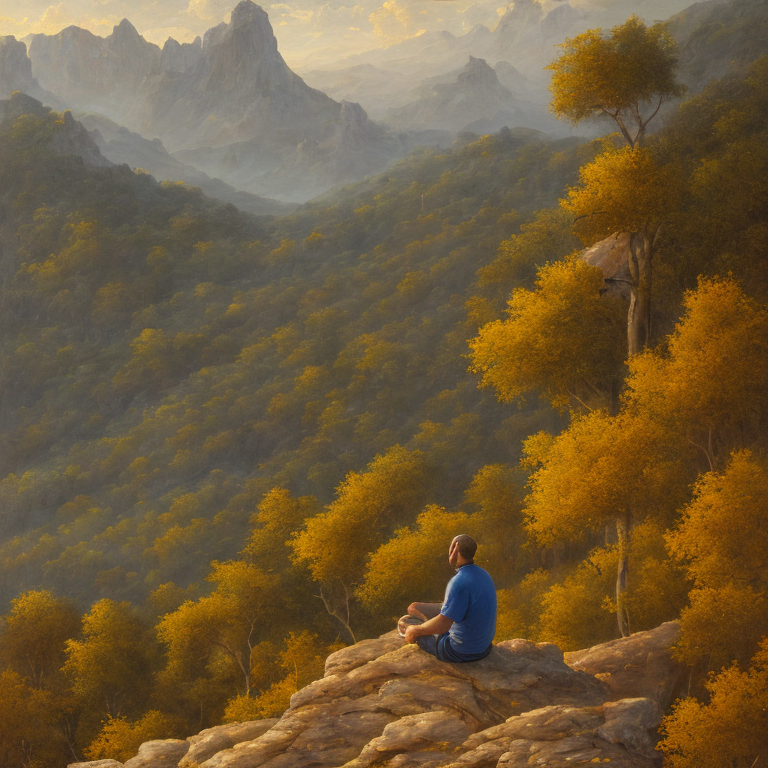
A couple of summers ago, I paid good money to sit in freezing cold water in the middle of Spain, breathe in ways that made me look mildly unhinged, and bond with a group of strangers over shared suffering. Standard Tuesday, really. The trip was a week-long Wim Hof expedition, ice baths, breathwork, the works, and I walked away with a daily practice that has quietly changed how I think, sleep, and manage stress.
But here’s what actually motivated me to book it when I did. It wasn’t FOMO. It wasn’t a sale. It was a simple, almost instinctive thought: the sooner I go, the sooner I get the benefits. Every month I waited was a month I wasn’t doing breathwork; I really didn’t even know what breathwork was. Every month I wasn’t doing breathwork was a month of returns I’d never get back.
Turns out, “one day” has a price tag. And it’s steeper than you think.
Adventure Pays Dividends
Central premise: adventures yield benefits.
Think about what it means to receive a benefit from an adventure. You go somewhere, do something, and come back changed. Maybe it’s a skill like breathwork. Maybe it’s a relationship forged on a trail in the middle of nowhere. Maybe it’s a perspective shift that quietly rewires how you move through the world.
Now think about what it means to delay that benefit. Every year you wait is a year you’re not putting it to work. The breathwork practitioner who started five years ago has five years of better sleep, clearer thinking, and lower stress that you simply don’t have. That gap is real, and it doesn’t close.
This is the same logic that makes money more valuable today than tomorrow. A dollar today can be invested, grown, and put to work immediately. A dollar promised in five years just sits there. Adventure benefits work exactly the same way. They compound. They open doors. They change what you do next. And the sooner you receive them, the longer they have to do all of that.
So when you file a trip under “one day,” you’re not just postponing an experience. You’re choosing to delay a benefit that could have been working for you this whole time. That’s not a neutral decision. That’s a cost.
The Math Behind the Intuition
So what I’m saying is there’s an opportunity cost to delaying adventures. Let’s put some structure around this idea. Think of the benefit of an adventure as a single number,  . It captures everything — the skill you learned, the relationships you built, the perspective you gained. Don’t worry about how we calculate it for now. Just accept that it exists and that bigger is better.
Now, here’s the key insight. If you realize that benefit today, it’s worth . If you realize it  periods from now — years, seasons, whatever unit of time feels natural — it’s worth less. Not because the adventure got worse, but because you missed out on all the returns you could have been collecting in the meantime.
We can write this simply as:
(1) 
Where  is the present value of the adventure, is how long you wait to take it, and
  (gamma) is your personal discount factor — a number between 0 and 1 that reflects how much you value present experience over future experience. The closer is to 1, the more patient you are. The closer to 0, the more you hate waiting.
connects directly to something more familiar. If you think of  as the rate of return you could be earning on your adventure benefits — say 5% per period — then:
![\[\gamma = \frac{1}{1+r}=\frac{1}{1.05} \approx 0.952\]](https://adventurizer.co/wp-content/ql-cache/quicklatex.com-aec3b92c0004bc5c0e74d8367a2f25bf_l3.png "Rendered by QuickLaTeX.com")
Which means a benefit realized one period from now is worth about 95 cents on the dollar today. Two periods out, about 91 cents. Ten periods out?
![\[\gamma^{10} = 0.952^{10} \approx 0.61\]](https://adventurizer.co/wp-content/ql-cache/quicklatex.com-060e89b6a0e053f0bf4c73c67c237d11_l3.png "Rendered by QuickLaTeX.com")
You’ve lost nearly 40% of the value of that adventure simply by waiting. Not because anything changed about the trip. Because time passed and you weren’t there yet.
The Returns You’ll Never See
So what does that 40% actually mean in practice? Let’s go back to the breathwork example.
Every morning I do breathwork, I collect a return on the benefit I received in Spain. Better focus. Lower stress. A cleaner start to the day. Each session is a small dividend paid out by an investment I made the moment I stepped off that plane.
Now imagine I had waited two more years to go. At a 5% discount rate, the present value of that benefit would have been worth about:
![\[\gamma^2 \times B = 0.952^2 \times B \approx 0.907 \times B\]](https://adventurizer.co/wp-content/ql-cache/quicklatex.com-37e88e2ae4669b5ddde54e9ee770e9b7_l3.png "Rendered by QuickLaTeX.com")
About 91 cents on the dollar. Sounds small. But that 9% gap represents two full years of mornings I wasn’t doing breathwork. Two years of stress I didn’t manage as well. Two years of sleep that wasn’t as deep. The opportunity cost of waiting isn’t abstract. It has a face, and it looks exactly like all the returns you never collected.
More formally, the cost of delaying an adventure by periods is:
![\[\text{Opportunity Cost} = B\times(1 - \gamma^t)\]](https://adventurizer.co/wp-content/ql-cache/quicklatex.com-7a0ed592844cf90f5e132a5a7a03a9a3_l3.png "Rendered by QuickLaTeX.com")
This grows with every period you wait. And it never comes back.
The Clock Discounting Can’t Capture
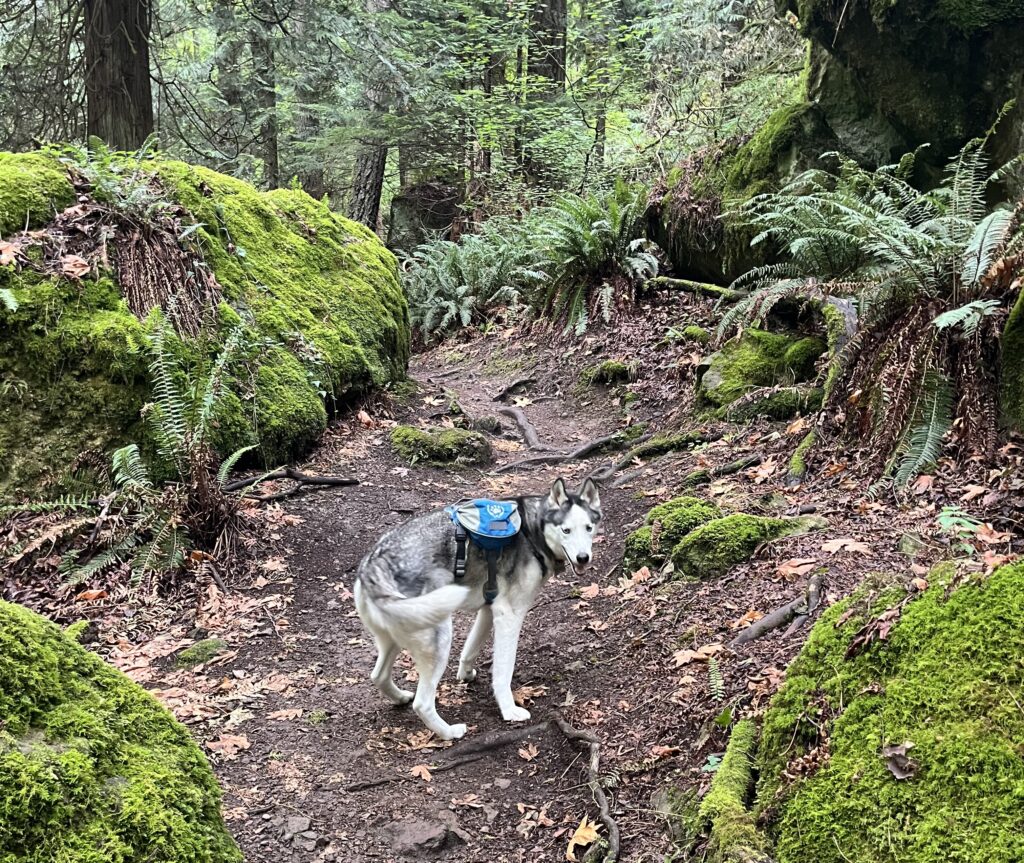
Right after Spain, I loaded my dog, Heiko, into the car and drove north. A month on the road, just the two of us, through New Mexico, up to the Grand Tetons, across to Calgary and Banff, over to Vancouver, then back down through Seattle to San Diego. We hiked wherever we could. It was one of the best things I’ve ever done.
Heiko is getting older. He still goes, still shows up, still hits the trail with everything he has. But I can see it. The pace has changed. The recovery takes longer. The mountains we once charged up together now require a little more negotiation.
And that changes things entirely.
In the breathwork example, was fixed. The expedition would have delivered roughly the same benefit whether I went this year or next. The only cost of waiting was the returns I didn’t collect in the meantime. But with Heiko, itself is shrinking. Every year I wait, the adventure we can share together is a smaller version of what it could have been. So the value of the trip isn’t just:
![\[V = \gamma^t \times B\]](https://adventurizer.co/wp-content/ql-cache/quicklatex.com-9e2f98c73a93e96d13a829be58a6abcb_l3.png "Rendered by QuickLaTeX.com")
It’s:
![\[V = \gamma^t \times B(t)\]](https://adventurizer.co/wp-content/ql-cache/quicklatex.com-462499a66e7c1bdd2e96240e46c2ead0_l3.png "Rendered by QuickLaTeX.com")
Where  is decreasing with time. Now delay is being penalized twice simultaneously — once by discounting, and once by the adventure itself becoming less rich.
The plot below illustrates the difference between the two cases.
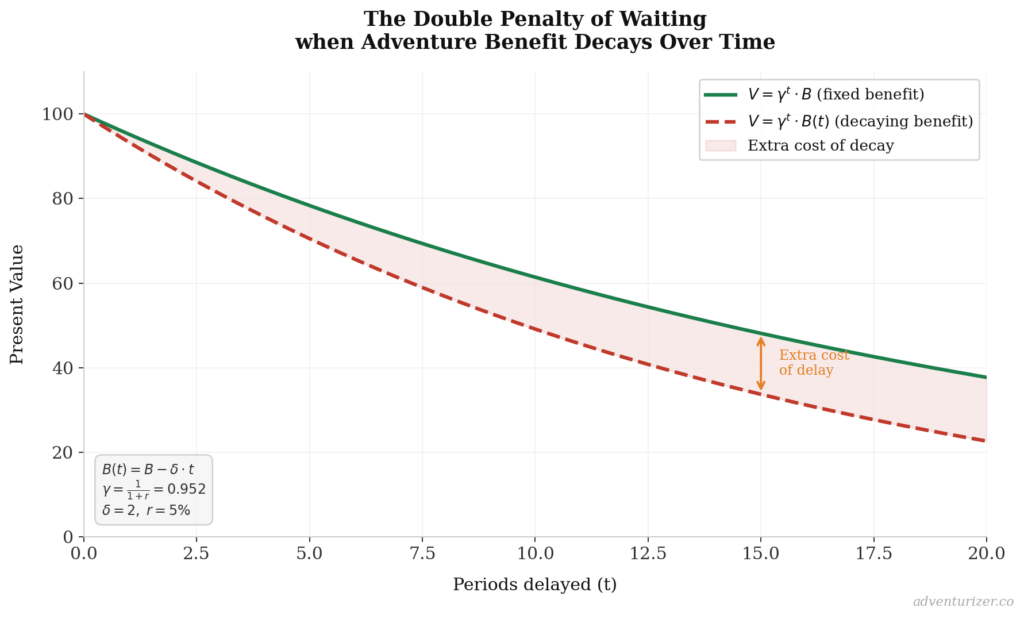
The green curve shows the standard case — a fixed benefit discounted over time. The red curve shows what happens when decays linearly. The shaded region between them is the extra cost of that decay, on top of standard discounting.
Even with a modest decay rate, the gap between the two curves grows substantially over time. Delay is not just costly — it is doubly costly when the adventure benefit itself is fading.
Heiko and I went when we did because the window was open. Next year the window would have been smaller. The year after, smaller still. That’s not pessimism. That’s just the math of getting older together.
What’s Your Number?
Every person carries their own . It reflects how urgently you feel the pull of present experience over future experience — how much it stings to know that the returns on an adventure are sitting uncollected somewhere out there. Some people have a high , close to 1, and are content to wait. Others feel the cost of delay viscerally and move quickly. Neither is wrong. But knowing your own number matters, because it determines how expensive your “one day” habit actually is.
How you estimate it is a topic for another post. For now, the important thing is simply recognizing that it exists, that it’s personal, and that every period you delay you’re paying a price proportional to it.
The Case for Now (with an Asterix)
Dreaming of adventure and relegating it to “one day” feels harmless. It feels responsible even — measured, patient, waiting for the right moment. But what we have shown is that “one day” is not a neutral holding pattern. It is an active choice to forgo the returns on an adventure that could have been working for you this whole time.
Every period of delay costs you  . That number grows quietly in the background whether you think about it or not. And unlike most financial decisions, you cannot recover it. The mornings of breathwork you didn’t do, the trails Heiko could no longer manage… those don’t come back.
The good news is that the framework cuts both ways. If delay is always costly, then acting sooner is always valuable — not recklessly, but with intention. The best time to book the trip was last year. The second-best time is as soon as you’re able to.
But wait… is that always true? Is there ever a rational case for waiting? As it turns out, yes. And that is exactly what we will explore in the next post.