
We don’t travel just to move. We travel to feel something — freedom, connection, clarity, awe.
But too often, the details we obsess over when planning a trip — which hotel, what flight, what to pack — feel disconnected from those deeper goals. We plan the logistics and hope the magic shows up on its own.
What if there were a way to reverse that?
To start with the human needs we’re trying to fulfill — and work backward into the details?
Maslow’s hierarchy of needs, a classic psychological model, gives us a map of what drives us. By using that map to guide our adventure planning, we can craft experiences that don’t just go smoothly — they nourish us.
Let’s get into the nitty gritty. But only so we can aim higher.
Join the Newsletter
Get AdventureOS updates, adventure highlights, and more in your mailbox.
What is Maslow’s Hierarchy?
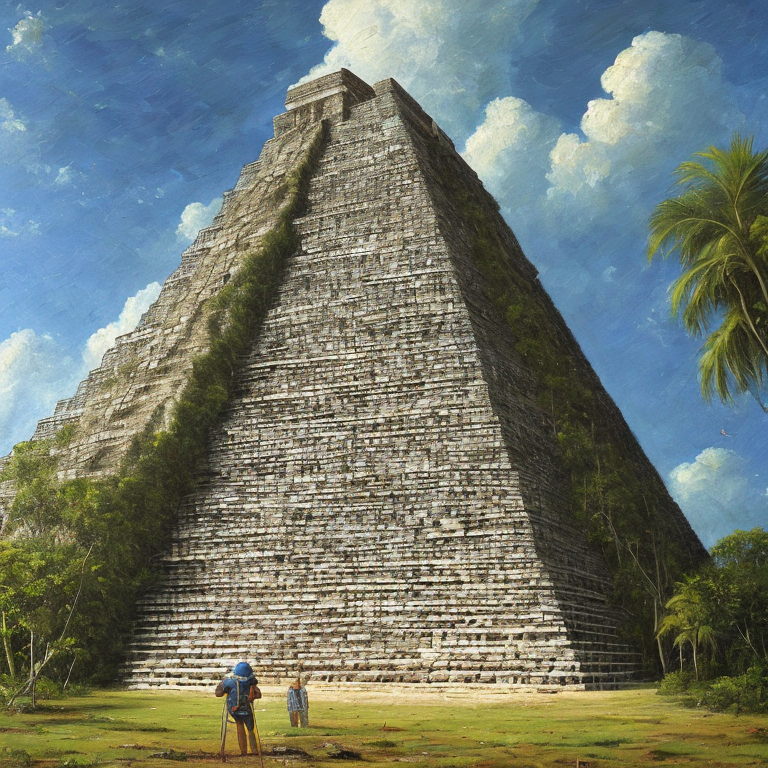
Originally proposed by psychologist Abraham Maslow in 1943, the Hierarchy of Needs is a motivational theory composed of five tiers of human needs, usually depicted as a pyramid. From bottom to top, the layers are:
- Physiological needs – food, water, shelter, sleep.
- Safety needs – personal security, health, financial stability.
- Love and belonging – friendship, intimacy, community.
- Esteem – respect, recognition, achievement.
- Self-actualization – realizing personal potential, creative expression, peak experiences.
Maslow suggested that the lower levels must be at least partially met before individuals can attend to the higher ones. While the hierarchy has faced critique over the years, its intuitive logic has made it a lasting tool in psychology, education, and even business.
Alternative Models and Their Overlap
Critics have pointed out that human needs are often not strictly hierarchical (Tay & Diener, 2011). Contemporary models like Self-Determination Theory (Ryan & Deci, 2000) propose three core needs — autonomy, competence, and relatedness — while Max-Neef’s Human Scale Development lists needs like subsistence, protection, affection, understanding, participation, leisure, and creation.
These models offer more nuance, but when it comes to planning a trip, they all converge on the same principle: experiences are richer and more rewarding when they meet both basic and higher-level needs. Maslow’s model remains a useful scaffold for this kind of thinking — especially for adventure travelers seeking meaning, challenge, and growth.
Applying Maslow’s Hierarchy to Adventure Planning
Let’s go tier by tier. For each, we’ll explore examples, common blindspots, and a key framing question:
What can I control, what can I influence, and what’s out of my hands?
1. Physiological Needs
What this includes: Food, hydration, sleep, shelter, body temperature.
Travel context: This is your baseline. If you’re hangry, dehydrated, freezing in your tent, or jet-lagged into oblivion — you’re not going to enjoy Machu Picchu.
Plan Smart:
- Control: Locating food options, ensuring hydration, booking a bed.
- Influence: Picking a region with predictable weather or cuisine you enjoy.
- Can’t Control: The airline meal, the surprise blackout, or your altitude-induced insomnia.
AdventureOS Tip: Our itinerary displays make food and lodging explicit, helping you plan realistically for this level before anything else.
2. Safety Needs
What this includes: Personal security, health, stable logistics, risk mitigation.
Travel context: Whether you’re hiking solo or navigating a new city, your body and brain won’t relax until they feel safe.
Plan Smart:
- Control: Emergency contacts, health insurance, maps downloaded offline.
- Influence: Choosing countries or neighborhoods with strong reputations for safety.
- Can’t Control: Political unrest, surprise injuries, or the bus that never shows.
Common blindspot: Adventure-seekers often underplay this one, but you can’t level up the pyramid while operating in survival mode.
3. Love & Belonging
What this includes: Friendship, intimacy, group identity, cultural connection.
Travel context: Feeling like you belong — whether it’s with travel partners, locals, or your online crew back home — shapes how deep your experience goes.
Plan Smart:
- Control: Who you travel with, how open you are to connection.
- Influence: Group tours, staying in hostels, participating in local events.
- Can’t Control: Whether you vibe with that travel buddy… or don’t.
AdventureOS Tip: We list thousands of group trips perfect for solo travelers seeking community.
4. Esteem Needs
What this includes: Accomplishment, confidence, respect, mastery.
Travel context: Bagging a summit, speaking a new language, navigating a foreign metro. These are esteem wins.
Plan Smart:
- Control: What challenges you take on, how you define success.
- Influence: The support you receive, how others see your efforts.
- Can’t Control: Whether you get external validation — or if you wipe out on the first surf wave.
Pro Tip: In Goals, Goals, Goals and The Adventurizer Matrix, I break down how to define adventure goals that are both meaningful and achievable — esteem fuel without burnout.
5. Self-Actualization
What this includes: Fulfillment, personal growth, artistic expression, flow.
Travel context: That transcendent moment when everything clicks — awe, presence, purpose. Maybe it’s on a mountaintop. Maybe it’s watching street dancers in Havana. Maybe it’s just you, journaling in a quiet park.
Plan Smart:
- Control: Your openness to the moment, your intention behind the trip.
- Influence: The structure of your itinerary, space for spontaneity.
- Can’t Control: Whether the magic shows up.
Artistic spin: In Adventure as Art, I explore how travel becomes a canvas — and self-actualization is the masterpiece.
Questions to Ask Yourself
Use this list to sanity-check your itinerary — or tweak it toward something more fulfilling.
Physiological
- Do I have guaranteed access to food and water each day?
- Am I getting enough rest to enjoy the adventure?
Safety
- Have I prepared for emergency scenarios?
- Do I feel confident navigating unfamiliar environments?
Love and Belonging
- Am I traveling with or planning to meet people I connect with?
- Have I left space for serendipitous encounters?
Esteem
- What personal challenge or accomplishment will this trip represent?
- Have I set a goal that matters to me — not just one that looks good online?
Self-Actualization
- What growth do I hope for?
- Is there unscheduled time for reflection, discovery, or awe?
Closing Thoughts
Adventure isn’t just about going far — it’s about going deep. When we plan from the bottom of Maslow’s pyramid upward, we create experiences that are not just enjoyable, but meaningful.
You don’t need to optimize every tier — just acknowledge them. That awareness alone will help you craft adventures that meet your needs, stretch your spirit, and leave you changed.
And if you want help visualizing the full stack of an adventure — from meals to meaning — check out AdventureOS, where I’m building tools to make all of this feel more intuitive.
Now go climb.
References
- Maslow, A. H. (1943). A theory of human motivation. Psychological Review, 50(4), 370–396.
- Tay, L., & Diener, E. (2011). Needs and subjective well-being around the world. Journal of Personality and Social Psychology, 101(2), 354–365.
- Ryan, R. M., & Deci, E. L. (2000). Self-determination theory and the facilitation of intrinsic motivation. American Psychologist, 55(1), 68–78.
- Max-Neef, M. (1991). Human Scale Development: Conception, Application and Further Reflections. New York: Apex Press.